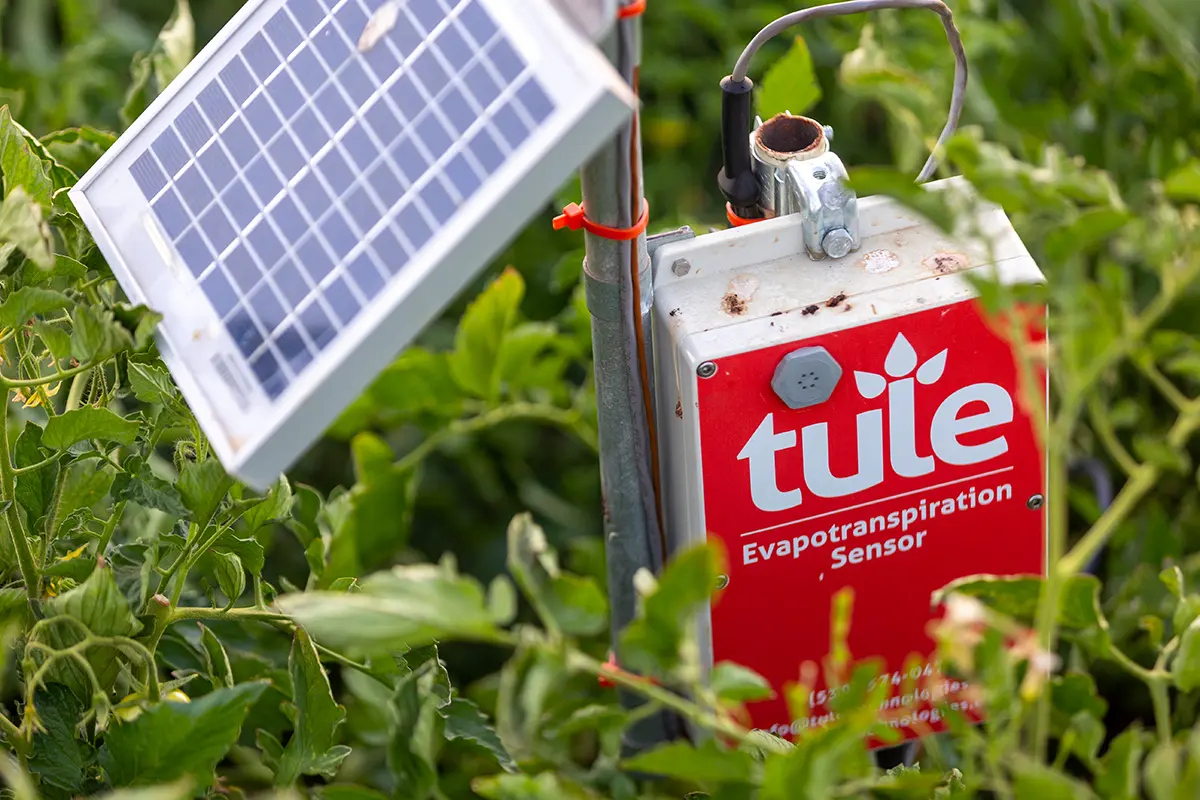
Tule Actual Evapotranspiration Sensor
Irrigation decision support systems (IDSS) are integrated solutions that combine and interpret real-time meteorological, soil moisture and crop water stress data to help growers make more efficient irrigation decisions.
Learn MoreIf you are experiencing issues with the comparison tool, please disable your adblocker.
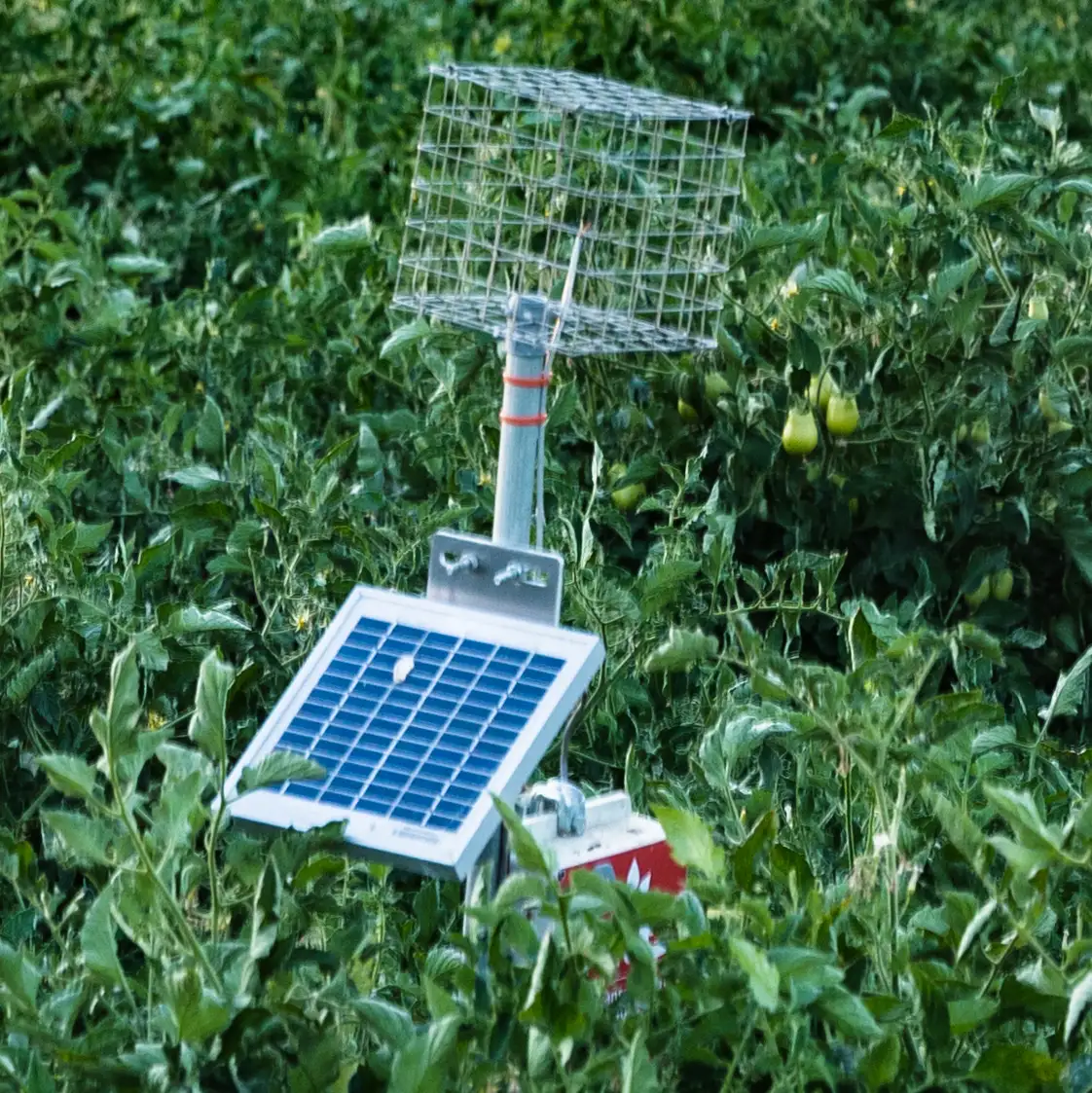
Tule Actual Evapotranspiration Sensor
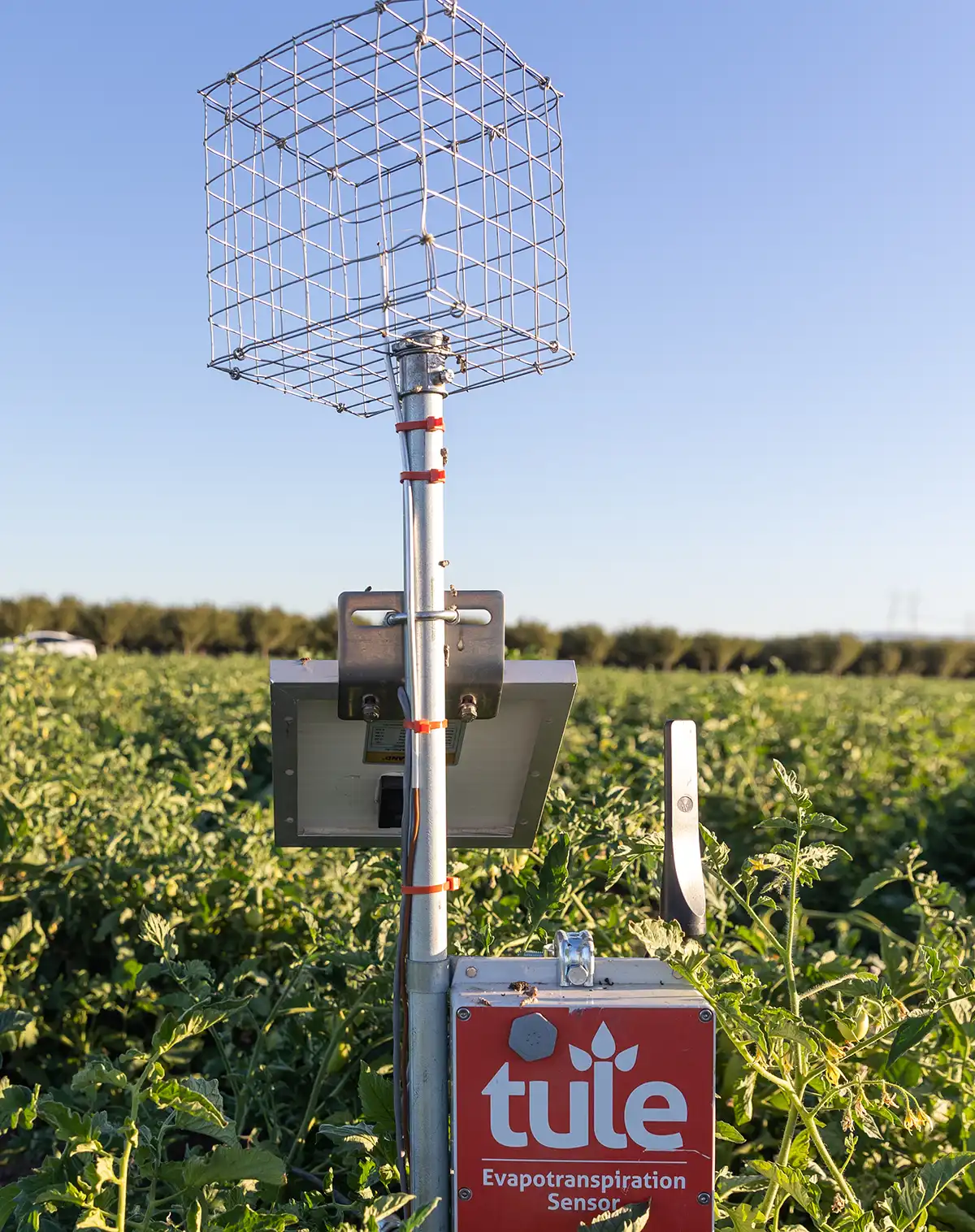
Tule sensors placed just above a crop’s canopy measure Actual Evapotranspiration (ETa) and provide growers real-time ETa data, crop water stress, irrigation monitoring, and irrigation suggestions daily.
Hub Highlights:
- Sensor installation is performed by Tule. In-line pressure switches may be installed by Tule or by the grower.
- Tule's online dashboard and mobile app allow the ability to forecast and target plant water stress and canopy development.
- Measures flow of a single drip line in duration (h) or volume (in).
Last Edited on: December 2025
| Manufacturer | Tule Technologies (now a part of CropX) |
| Product Name | Tule Actual Evapotranspiration Sensor |
| General Specifications | Need info from provider |
| Data Resolution | Hourly reporting |
| Canopy/Field Coverage | Dependendend on the crop, topography, and goals of the farmer. The standard recommendation is one device per management zone. |
| Type of Telemetry | Minimum 4G |
| Sensor Height/depth | Tule sensors placed just above a crop's canopy |
| Soil Based | No integration of soil sensors |
Last Edited on: December 2025
| Sample Size | 3 |
|
Intersensor Variaibility
|
3.3±2.3% |
|
Correlation with Research Grade Instrumentation
|
0.83 |
|
Annual operating power of sensor - 30 acre farm (kWh/ha)
|
Self-contained solar |
|
Annual operating power of sensor - 300 acre farm (kWh/ha)
|
Self-contained solar |
|
Annual operating power of sensor - 3000 acre farm (kWh/ha)
|
Self-contained solar |
|
Potential energy savings from reduced irrigation water pumping due to more accurate water consumption usage data
|
23% |
|
Surface water (kWh/ha)
|
20 |
|
Shallow groundwater - 8 m well (kWh/ha)
|
86 |
|
Deep groundwater - 50 m well (kWh/ha)
|
371 |
|
COMET estimate of power savings (kWh/ha)
|
27.9 |
|
DNDC model N2O emission reductions (kg N/ha/yr)
|
0.27 |
|
DNDC model CH4 emission reductions (kg C/ha/yr)
|
No appreciable differences based on model |
Last Edited on: December 2025
Data Collection
Sample Size
3
Usability and performance
How does the IDSS appear in the grower's field and how often can/should the user interface with the IDSS?
The Tule sensor appears as a small above canopy sensor tower (looks like a small meteorological station) and its height depends on the height of the cropping system. Users can monitor sensor outputs instantaneously via smartphone apps and should monitor at the scale of Irrigation scheduling (daily-weekly)
Installation
How long does installation take and who does installation?
The company installs the sensors and coordinates with the grower on the best day/time for sensor installation.
Installation/Removal
Can this remain in place around planting, harvest activities?
In annual crops like processing tomato, installation and removal occur around planting and harvest processes. In perennial crops like almond or pistachio, the Tule can remain in row during harvest operations, but is typically removed by the company during the non-irrigating winter months
Maintenance
What types of in-season maintenance are required?
Make sure plant growth or vines are trimmed near the sensor so they do not get ensnared in wires or the cube protecting the inner thermocouple sensor. Make sure the protecting cube is maintains its position around the sensor. Keep solar panel facing south and periodically clean it to ensure there is no debris. Make sure the pressure switch is connected to the irrigation line and no damage is done to the tube connected to the pressure switch.