Irrigation decision support systems (IDSS) are integrated solutions that combine and interpret real-time meteorological, soil moisture and crop water stress data to help growers make more efficient irrigation decisions.
If you are experiencing issues with the comparison tool, please disable your adblocker.
Arable Labs, Inc. Arable Mark 2
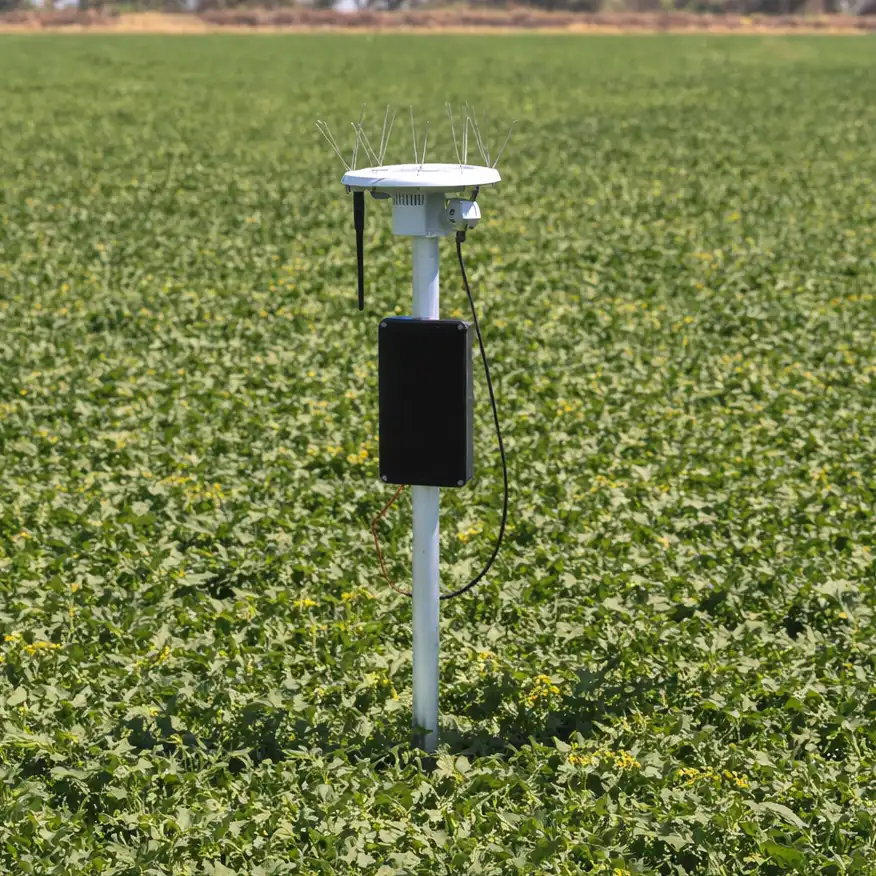
The Arable Mark 2 is a canopy sensor and weather station, collecting up to 40 different climate and plant metrics, such as evapotranspiration, NDVI, and crop water balance.
Hub Highlights:
Installs in minutes, deploys with the push of a button, and requires no maintenance.
Collected data accessible on Arable's Web and Mobile apps and via API integration.
Arable Bridge, sold separately, allows for integration of auxiliary sensors such as anemometers, soil moisture probes, and pressure switches.
$999/yr or $1,999/3-yr for Mark 2, $1,199/yr or $2,399/3-yr for Mark 3
Last Edited on: December 2025
Manufacturer
Arable Labs, Inc.
Product Name
Arable Mark 2
Sensor(s) Evaluated
Evapotranspiration
Data Resolution
Hourly reporting, but option for 15-minute reporting for an additional cost
Canopy/Field Coverage
Dependent on the crop, topography, and goals of the farmer. The standard recommendation is one device per management zone.
Type of Telemetry
Minimum 4G
Sensor Height/depth
Manufactuer recommendation: 3ft above maximum canopy height
Soil Based
Optional soil metrics derived (Soil probe from Sentek could be used)
Last Edited on: December 2025
Intersensor Variaibility
10±17.8%
Correlation with Research Grade Instrumentation
0.93
Annual operating power of sensor - 30 acre farm (kWh/ha)
self-contained solar
Annual operating power of sensor - 300 acre farm (kWh/ha)
self-contained solar
Annual operating power of sensor - 3000 acre farm (kWh/ha)
self-contained solar
Potential energy savings from reduced irrigation water pumping due to more accurate water consumption usage data
26%
Calculated potential energy savings by water source: Surface water (kWh/ha)
23
Calculated potential energy savings by water source: Shallow groundwater - 8 m well (kWh/ha)
97
Calculated potential energy savings by water source: Deep groundwater - 50 m well (kWh/ha)
420
COMET estimate of power savings (kWh/ha)
31.5
DNDC model N2O emission reductions (kg N/ha/yr)
0.31
DNDC model CH4 emission reductions (kg C/ha/yr)
no appreciable differences based on model
Last Edited on: December 2025
Data Collection
Product evaluators at the UC Davis California Lighting Technology Center identified and assessed system characteristics related to user experience.
Sample Size
3
Usability and performance
How does the IDSS appear in the grower's field and how often can/should the user interface with the IDSS?
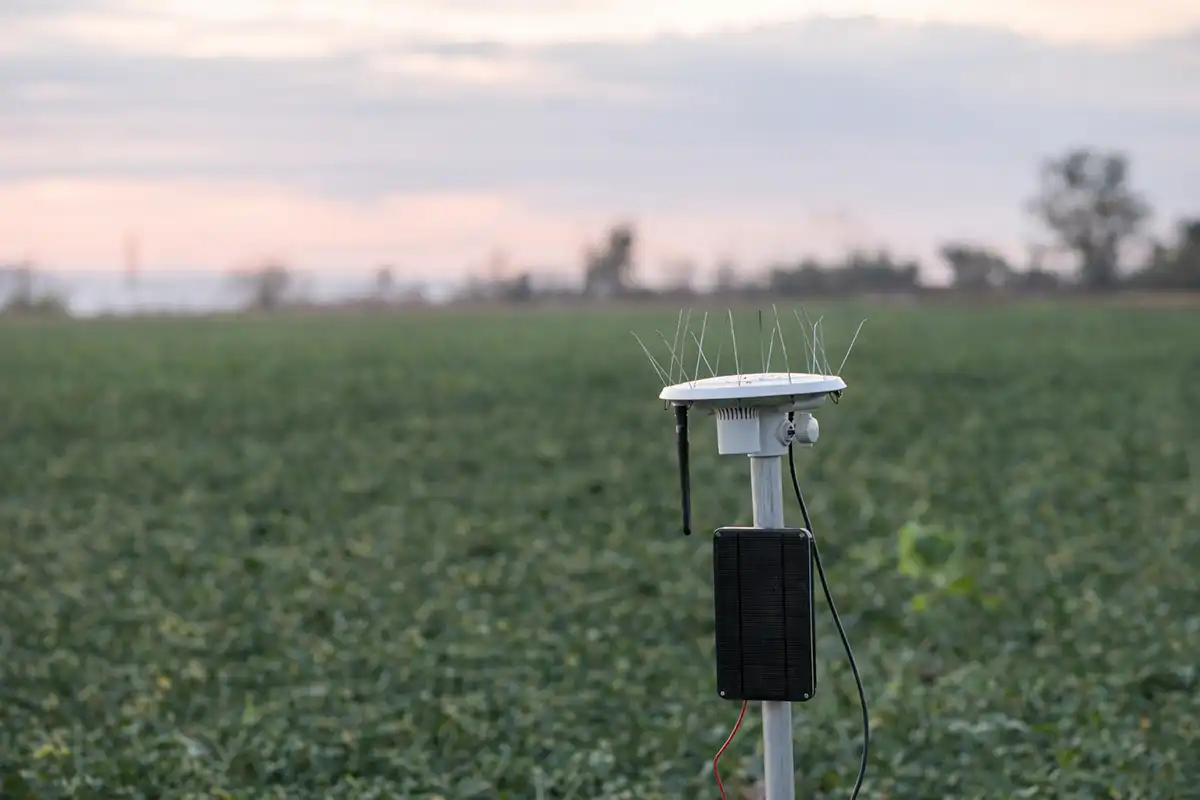
The Mark 2 appears as a small above canopy sensor tower (looks like a small meteorological station) and its height depends on the height of the cropping system. Users can monitor sensor outputs instantaneously via smartphone apps and should monitor at the scale of Irrigation scheduling (daily-weekly)
Installation
How long does installation take and who does installation?
The user installs the Arable Mark 2 and installation take about an hour for a new user.
Installation/Removal
Can this remain in place around planting, harvest activities?
In annual crops like processing tomato, installation and removal occur around planting and harvest processes. In perennial crops like almond or pistachio, the Mark 2 can remain in row during harvest operations, but should be stored removed and stored during non-irrigating winter months.
Maintenance
What types of in-season maintenance are required?
Cleaning the top of the Mark 2 sensor is important so it can stay charged (solar-powered). Gently wipe the dome with water and a clean rag periodically, especially in dusty areas or following spraying events.